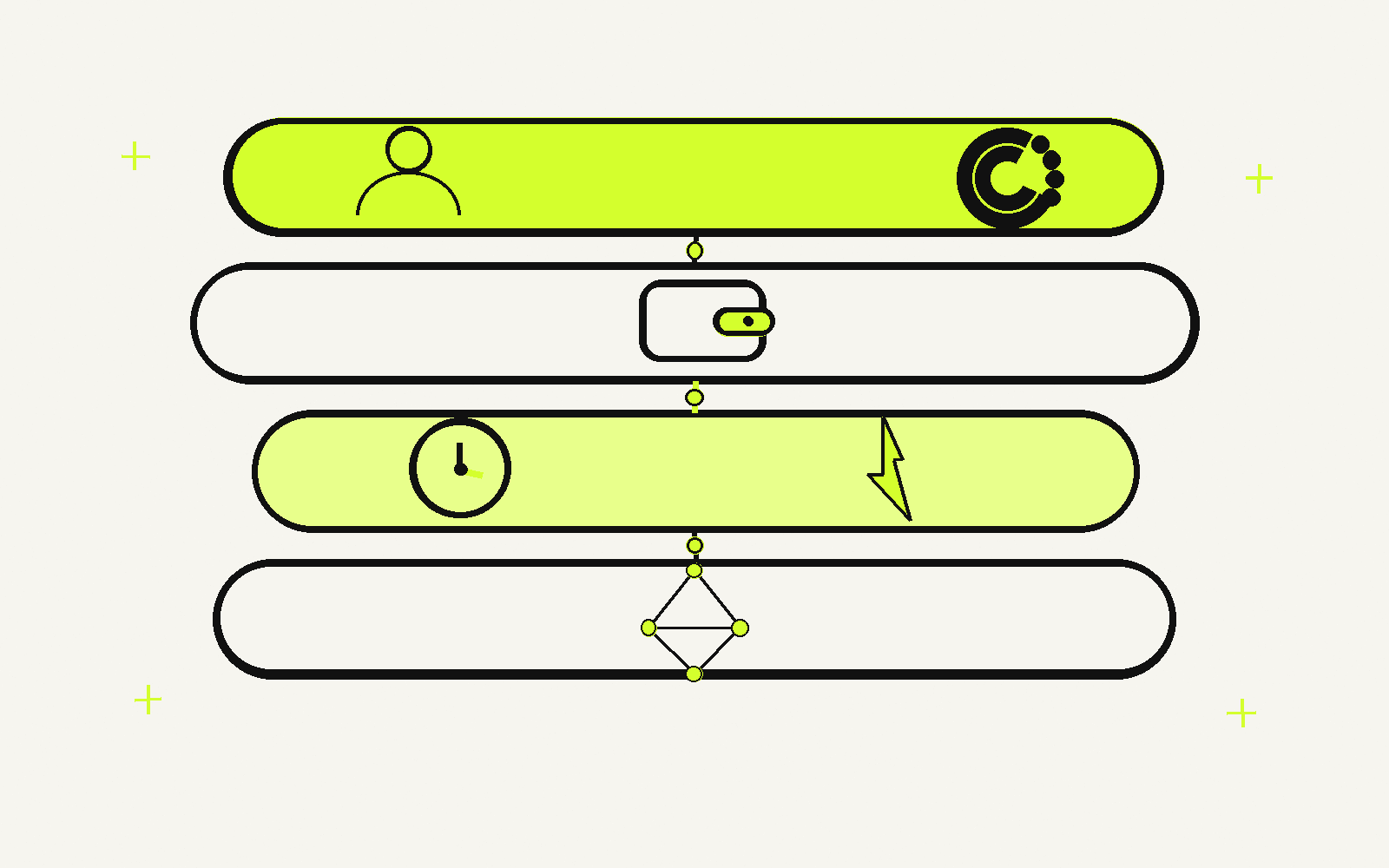
01 — CREATE
Create the Rule
Define the transfer or application action that should happen onchain.
Oreum Network is designed as an EVM-compatible Layer 1 built around reliable transaction automation. Create scheduled, recurring and conditional actions with bounded permissions, transparent rules and user-controlled revocation.
Most chains process immediate transactions well, but future and conditional execution is usually delegated to bots, keepers, backend servers or repeated manual signatures.
Oreum Autopilot turns automation into a first-class network capability. Oreum Rules define exactly what may happen, when it may happen, how much may be spent, how fees are funded, and when permission expires.
Autopilot supports protocol-recognized Rules for scheduled and recurring actions at MVP, with event, state, oracle and multi-condition triggers introduced in later phases.
Define the transfer or application action that should happen onchain.
Set a date, time, interval, or recurring cadence for execution.
Confirm the schedule through a clear wallet or application flow.
The network processes the scheduled action when its conditions are met.
Oreum’s automation stack is designed for repeatable workflows including payroll, subscriptions, vesting, rewards, AutoStake, DCA, escrow, revenue sharing, treasury Rules and security automation.
Oreum organizes user applications, smart accounts, the automation layer, EVM execution and PoS BFT consensus inside one security domain. The Scheduler, Rules Registry and Automation Gas Lane form the principal automation path.
Processes normal smart-contract transactions and scheduled actions under the network’s execution rules.
Registers time conditions, recurring intent, execution windows, and the lifecycle of scheduled transactions.
Wallets, dApps, businesses, and developer tools compose Oreum scheduling into products users already understand.
Oreum AI converts natural-language intent into a structured Rule or OneTap action for validation, SafeSign simulation and user approval. Oreum Forge is the later no-code environment for building from verified modules.
Read the complete 24-section Oreum Network Whitepaper covering Oreum Autopilot, Oreum Rules, the Scheduler, Automation Gas Lane, Smart Accounts, OneTap, FlexGas, SafeSign, products, Oreum AI, Forge, security, $ORM utility, governance, roadmap and risks.
Oreum Network gives users bounded, revocable automation while keeping deterministic protocol logic and user authorization as the source of authority.